How to find a Farsi-speaking nanny in Los Angeles
Where Persian families actually find caregivers in LA, the Farsi and Dari distinction, and the questions worth asking.

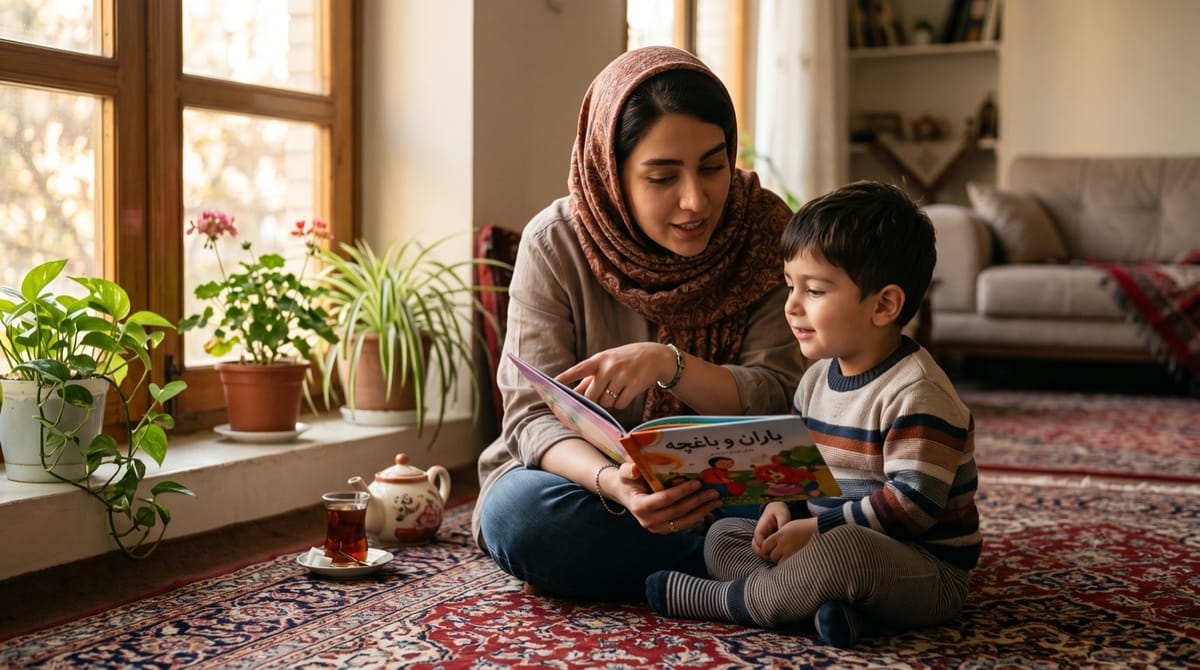
Los Angeles has the largest Iranian population outside Iran. Tehrangeles is not a joke, it is a census fact. And yet finding a Farsi-speaking nanny here is harder than it should be, because the search happens almost entirely inside private networks.
Here is where families actually look, what each channel is good and bad at, and what to ask once you find someone.
Where Farsi-speaking families actually find caregivers
1. The community network
Most placements in LA still happen through someone's aunt. Persian schools, the mosque or church, Nowruz events, the Westwood and Encino business networks, and family WhatsApp groups. It is the highest-trust channel and it has two real weaknesses: it is slow, and it only reaches as far as your own circle. Families who moved recently or who are not connected to a community organisation are effectively locked out.
2. General marketplaces
The large national platforms have volume but poor language filtering. You end up reading hundreds of profiles hoping someone mentions Farsi in a paragraph of free text. Language is treated as a nice-to-have tag rather than the thing you are actually searching for.
3. Persian-specific directories
Several LA directories list Iranian caregivers. Useful, though many are listing-only, with no verification and often stale entries.
4. Language-first marketplaces
This is what we built, so weigh it accordingly: search by language first, filter by city, rate and availability, with every profile admin-reviewed before it goes live. Farsi-speaking nannies in Los Angeles.
Farsi, Dari, or "Persian"?
Worth being precise, because it affects who you should be talking to.
Farsi and Dari are mutually intelligible varieties of Persian, spoken in Iran and Afghanistan respectively. A Dari-speaking caregiver can absolutely maintain your child's Farsi, and many families are happy either way. But the vocabulary, accent and cultural reference points differ, and if the goal is a child who sounds natural talking to grandparents in Tehran, that is worth naming out loud rather than discovering later.
If you specifically want an Afghan caregiver, we keep those listed separately for exactly this reason.
Questions worth asking, beyond the usual
Assume you already know to ask about experience, references and CPR. These are the ones specific to hiring for language.
- "Will you speak only Farsi with my child, even when I am in the room?" This is the single most important question, and the most commonly skipped. Many bilingual caregivers switch to English by default out of politeness. If you do not agree the rule explicitly, it will drift within a month.
- "What did you do with children at this age in Iran?" You are listening for songs, rhymes, and games, the material that carries a language into a child rather than vocabulary drills.
- "How do you feel about correcting my child's Farsi?" Some caregivers find it rude to correct an employer's child. You need to give explicit permission.
- "Which holidays matter to you?" Practical for scheduling around Nowruz and Yalda, and it tells you what your child will absorb.
- "What was your visa and work history?" Ask directly and early. It is awkward once, and much worse later.
What to pay
Los Angeles nannies run roughly $26 to $30 an hour full-time in 2026, with a genuine premium for in-demand languages. Expect the upper half of that range for a fluent Farsi speaker with real childcare experience, and do not try to negotiate the language skill away. It is the thing you are hiring for.
Full breakdown, including the employer taxes people forget: see our cost guide.
One thing to decide before you start
Are you hiring childcare that happens to speak Farsi, or are you hiring for the language?
Those are different searches. The first is about hours, reliability and cost, and Farsi is a bonus. The second means language fluency outranks convenience, and you may take someone further away or slightly more expensive because they are the right speaker. Families who never make that decision consciously tend to optimise for convenience and then wonder, three years later, why their child answers in English.