Why children stop speaking their parents' language
The shift happens in the second generation, not the third, and faster than parents expect. What the research says actually reverses it.

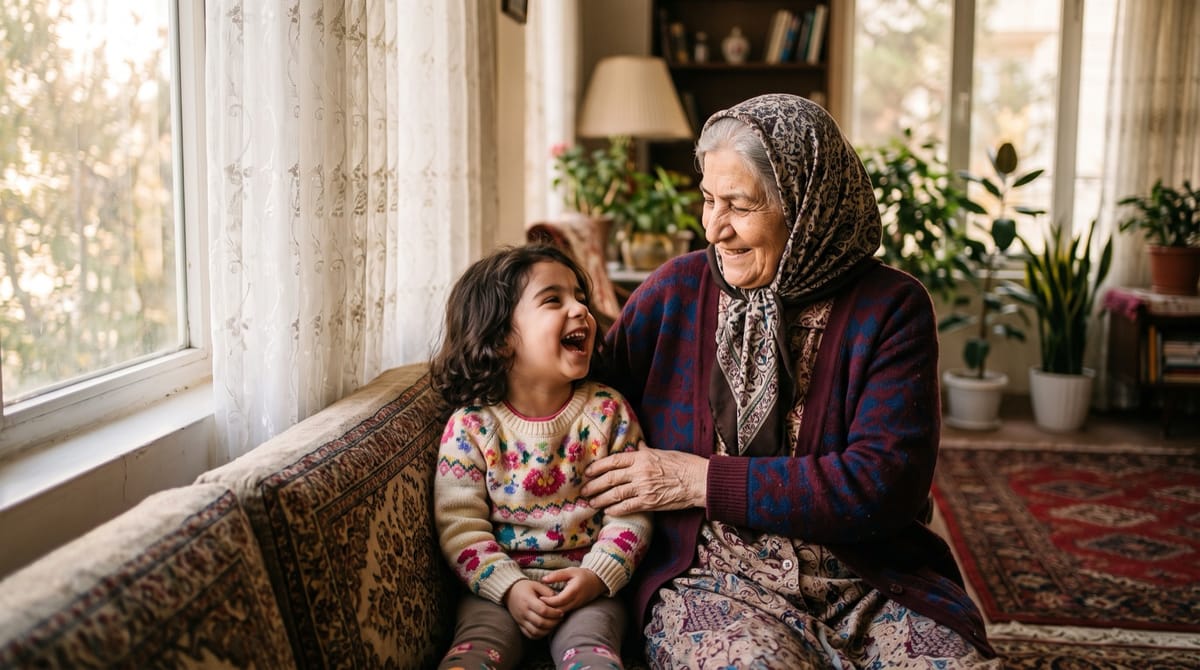
Almost every immigrant family follows the same arc, and almost none of them see it happening until it has already happened.
The first generation speaks the language at home. The second generation understands it but answers in English. By the third, it survives as a handful of phrases saved for grandparents at holidays. Researchers who study this expected the shift to take three generations. What they found is that it mostly happens in the second, and faster than anyone predicted.
One UK study of second-generation South Asian families found that most children understood their heritage language perfectly well. Fewer than a third actually spoke it with their own siblings.
Comprehension is not retention
This is the part that catches parents off guard. Your four-year-old understands everything you say. You ask a question in Farsi or Mandarin or Arabic, and they answer correctly, in English. Nothing appears to be wrong.
But understanding and speaking are different skills, and only one of them survives without use. A child who never has to produce the language loses the ability to produce it, while keeping just enough comprehension to hide the loss from everyone, including themselves.
The moment it becomes visible is usually a phone call with a grandparent that goes quiet.
Why "we speak it at home" often is not enough
Most parents are already doing the obvious thing. They speak the language at home. It frequently still does not work, for a reason that has nothing to do with effort.
Language survives on hours and on necessity. A child in daycare or school is immersed in English for eight to ten hours a day, in an environment where English is required to get anything they want. Two hours of heritage language at home, in a house where every adult also speaks fluent English, cannot compete on either count. The child learns, correctly, that the heritage language is optional.
The research points at the same two factors every time: regular use, and an environment where the language is genuinely needed.
What actually moves the needle
The interventions that work all do the same thing. They add hours in which the language is not optional.
- A caregiver who speaks it as a first language. This is the highest-leverage change available to most families, because it converts the largest block of a young child's waking hours from English to the heritage language, during the years when acquisition is easiest.
- Extended family time, especially with grandparents who are not comfortable in English. Necessity does the teaching.
- Weekend or bilingual school, which adds hours and, importantly, peers.
- Media the child actually chooses, rather than media the parent assigns.
Note what is missing from that list: apps, flashcards, and good intentions. They add minutes. The problem is measured in hours.
The caregiver point, honestly
We run a marketplace for caregivers who speak your family's language, so treat this section with appropriate suspicion. But the mechanism is not complicated and it is not ours: a nanny who speaks only Farsi to your child for thirty hours a week roughly doubles or triples that child's exposure, in the window where children acquire accent and grammar without effort.
It also changes the register. A child raised partly by a Farsi-speaking caregiver learns Farsi for play, for negotiation, for being comforted, and for being told off. That is a much wider and more durable vocabulary than the mealtime-and-bedtime slice most heritage speakers end up with.
What a caregiver cannot do is fix it later. The families for whom this works are the ones who start before school does.
Where to start
If you already know which language you are trying to keep, the practical next step is finding someone who speaks it natively:
- Farsi-speaking nannies
- Mandarin and Cantonese-speaking nannies
- Arabic-speaking nannies
- Spanish-speaking nannies
- Dari and Pashto-speaking nannies
- Portuguese-speaking nannies
The window is narrower than it feels. The children who keep the language are, almost without exception, the ones who had somewhere to use it every day before they turned six.